
What Are Deadstock Fabrics? Everything You Need to Know
As consumers become increasingly conscious of how their clothes are made, one term continues to appear in conversations about responsible fashion: deadstock fabrics.
But what exactly are deadstock fabrics? Are they sustainable? Are they of lower quality, or are they actually some of the finest textiles available?
In this guide, we'll explain everything you need to know about deadstock fabrics, why they matter, and why they play an important role in the future of luxury fashion.
What Are Deadstock Fabrics?
Deadstock fabrics are unused textiles that were originally produced for fashion houses or textile manufacturers but were never used in production.
These fabrics may remain available for several reasons:
A fashion house ordered more fabric than it ultimately needed.
A collection was cancelled before production.
A textile mill produced excess inventory.
A luxury brand changed colours or materials during development.
Rather than being discarded, these exceptional fabrics are made available to designers and independent brands.
Contrary to a common misconception, deadstock does not mean old, damaged, or poor quality. In many cases, these textiles were originally manufactured for some of the world's most prestigious luxury houses.
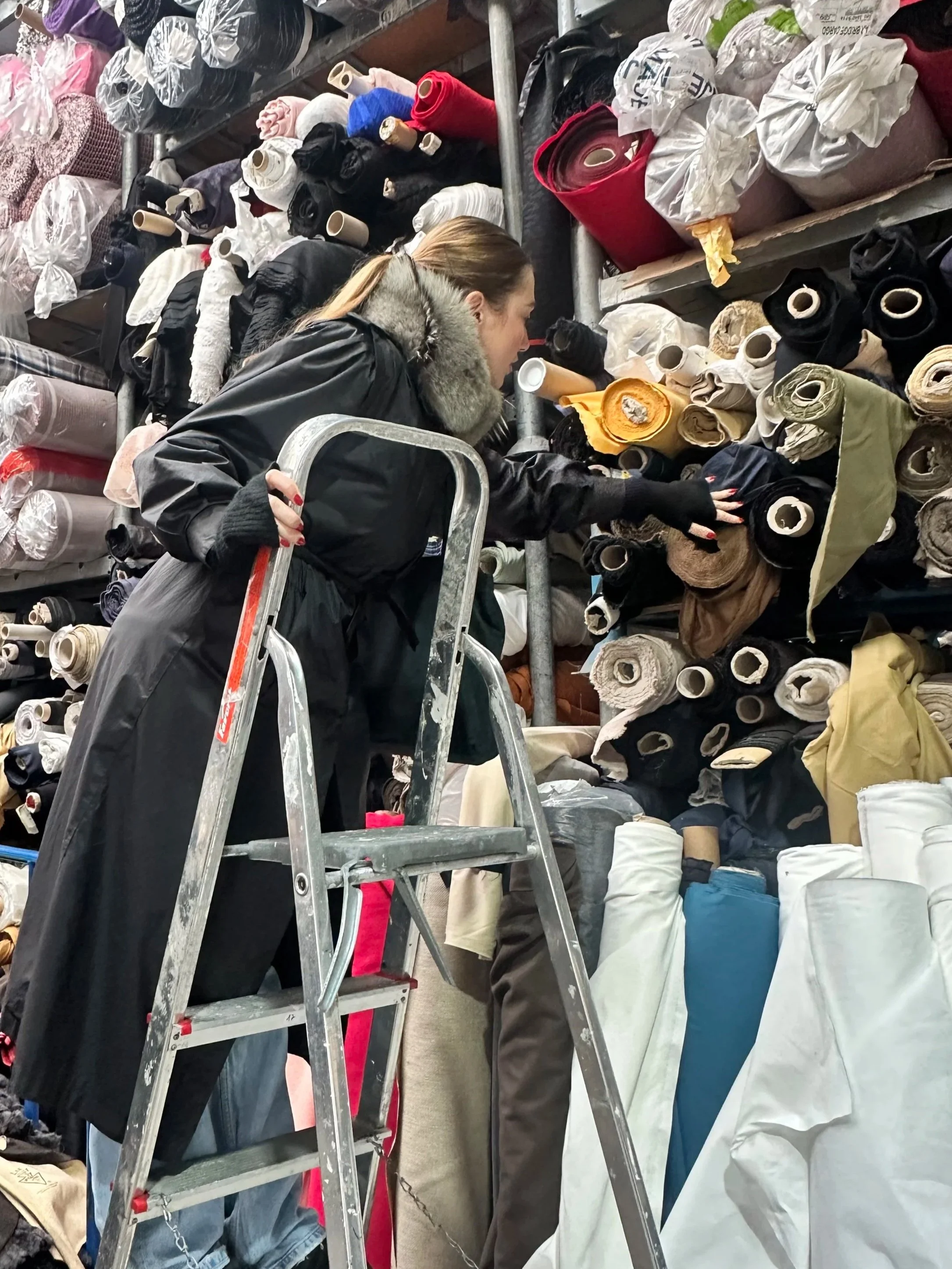
Here you see me selecting deadstock fabric rolls from a warehouse near Paris.
Why Is Deadstock Considered More Sustainable?
The fashion industry produces millions of metres of fabric every year, and not all of it is ultimately used.
Choosing deadstock fabrics helps reduce unnecessary waste by giving existing materials a second life instead of commissioning new production.
While deadstock alone does not solve every environmental challenge within fashion, it is an important step toward a more thoughtful approach to design and manufacturing.
It allows beautiful textiles to fulfil the purpose for which they were originally created: becoming garments that are worn and appreciated.
Are Deadstock Fabrics High Quality?
Absolutely.
One of the greatest advantages of deadstock is the opportunity to work with fabrics that would otherwise be inaccessible to young independent brands.
Depending on the supplier, deadstock collections may include:
silk chiffon
wool gabardine
premium cottons
cupro
fine denim
jacquard fabrics
luxury linings
Many of these textiles were originally developed for premium or luxury collections, making them exceptional both in quality and craftsmanship.
Why Are Deadstock Fabrics Limited?
Unlike newly manufactured textiles, deadstock fabrics exist in finite quantities.
Once a roll has been sold, it is often impossible to reorder the exact same fabric.
For designers, this creates exciting creative opportunities, but it also means that collections are naturally produced in smaller quantities.
For customers, it makes each garment feel even more special, knowing that the material may never be available again.
Deadstock vs. Recycled Fabrics
Although they are sometimes confused, deadstock and recycled fabrics are not the same.
Deadstock fabrics are existing textiles that have never been used.
Recycled fabrics, on the other hand, are created by processing existing garments or textile waste into new fibres before weaving entirely new fabric.
Both approaches contribute to a more responsible fashion industry, but they represent different stages of the production cycle.
Why Luxury Brands Are Embracing Deadstock
More independent designers—and even established luxury houses—are incorporating deadstock into their collections.
Beyond its environmental advantages, deadstock encourages creativity.
Designers work with unique materials available in limited quantities, resulting in collections that feel distinctive rather than mass-produced.
For customers, this often means owning garments that are genuinely rare.
Deadstock at OBADIA
At OBADIA, we believe that exceptional garments begin with exceptional materials.
For this reason, we carefully select premium deadstock fabrics for the vast majority of our collections. These textiles allow us to combine craftsmanship, quality, and thoughtful production while embracing the unique character of limited-edition fashion.
Each fabric tells its own story before it even reaches our atelier. Our role is simply to continue that story through design.
Final Thoughts
Deadstock fabrics represent more than an alternative sourcing method.
They reflect a philosophy that values quality over quantity, craftsmanship over excess, and longevity over disposability.
As fashion continues to evolve, choosing existing exceptional materials instead of producing new ones whenever possible is one way to create clothing with greater intention.
Whether you’re discovering deadstock for the first time or already appreciate its unique qualities, one thing remains certain: some of the most beautiful fabrics in the world are simply waiting for their next chapter !
- Marie <3