
The History of the Corset: From Restriction to Empowerment
For centuries, the corset has been one of fashion's most misunderstood garments.
Often reduced to a symbol of restriction or discomfort, its history is far richer and more complex. Worn by queens, aristocrats, performers and designers, the corset has continuously evolved alongside changing ideas of beauty, femininity and self-expression.
Today, it has become a symbol of confidence rather than constraint.
Where Did the Corset Originate?
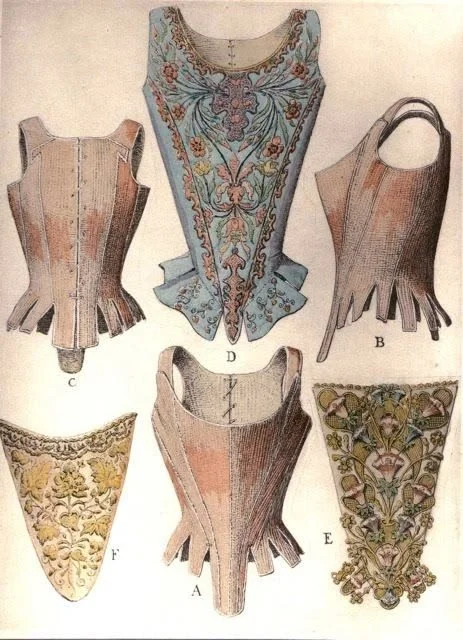
The earliest forms of structured bodices appeared during the sixteenth century in European royal courts.
Rather than creating an impossibly small waist, these garments were designed to shape the torso into a smooth, elongated silhouette that reflected the ideals of elegance at the time.
Constructed using layers of linen and reinforced with whalebone, wood or reed, early corsets were highly structured garments requiring remarkable craftsmanship.
The Victorian Era
By the nineteenth century, corsets had become an essential element of women's wardrobes.
Contrary to popular belief, not every Victorian woman pursued an extreme hourglass figure. Everyday corsets varied considerably depending on social class, occupation and personal preference.
Many provided practical support beneath heavy garments while helping dresses maintain their intended silhouette.
During this period, corset-making became an exceptional craft, combining precise pattern cutting, hand finishing and carefully engineered construction.
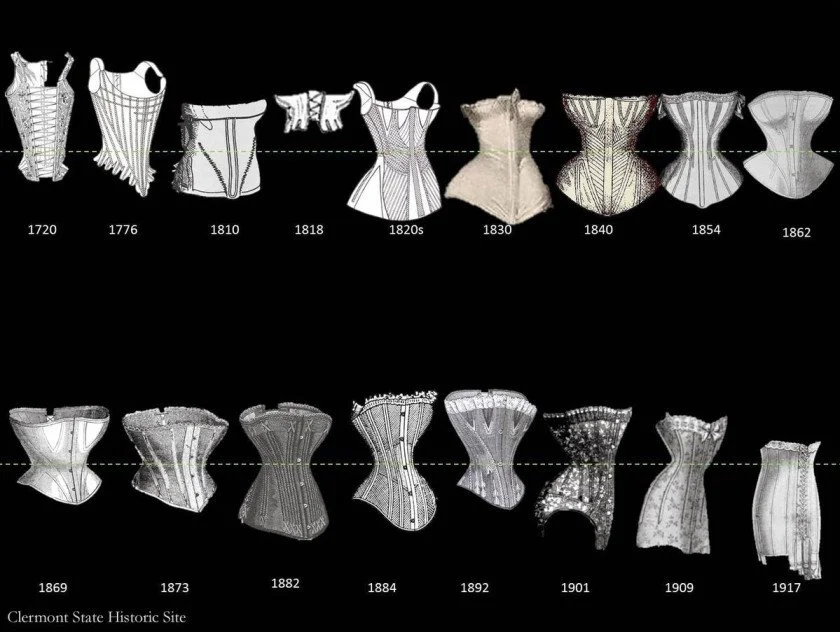
History of corset shapes - found online.
The Decline of the Corset
At the beginning of the twentieth century, changing lifestyles transformed women's fashion.
Designers gradually embraced softer silhouettes, while World War I accelerated the disappearance of heavily structured garments.
Lighter undergarments replaced traditional corsets, allowing greater freedom of movement.
For many years, the corset became associated with outdated beauty standards.
The Corset Returns
Fashion has a remarkable ability to reinterpret its past !
Beginning in the late twentieth century, designers revisited the corset—not as underwear, but as outerwear.
Rather than hiding beneath clothing, it became the focal point of an outfit.
Modern corsets celebrate craftsmanship, tailoring and structure while offering countless interpretations, from minimalist silhouettes to dramatic couture creations.
The Corset in Contemporary Fashion
Today’s corset is no longer about conformity. Instead, it represents personal style.
Some designs gently shape the body through careful construction, while others simply borrow the visual language of corsetry through seams, boning or sculptural cuts.
The corset has become less about changing the body than celebrating it.
Craftsmanship Behind Corsetry
Creating a beautifully constructed corset remains one of fashion's greatest technical challenges.
Every detail matters:
pattern engineering
fabric selection
internal boning
precise seam placement
balanced proportions
expert finishing
Whether fully structured or merely inspired by historical corsetry, these techniques continue to influence contemporary luxury fashion.
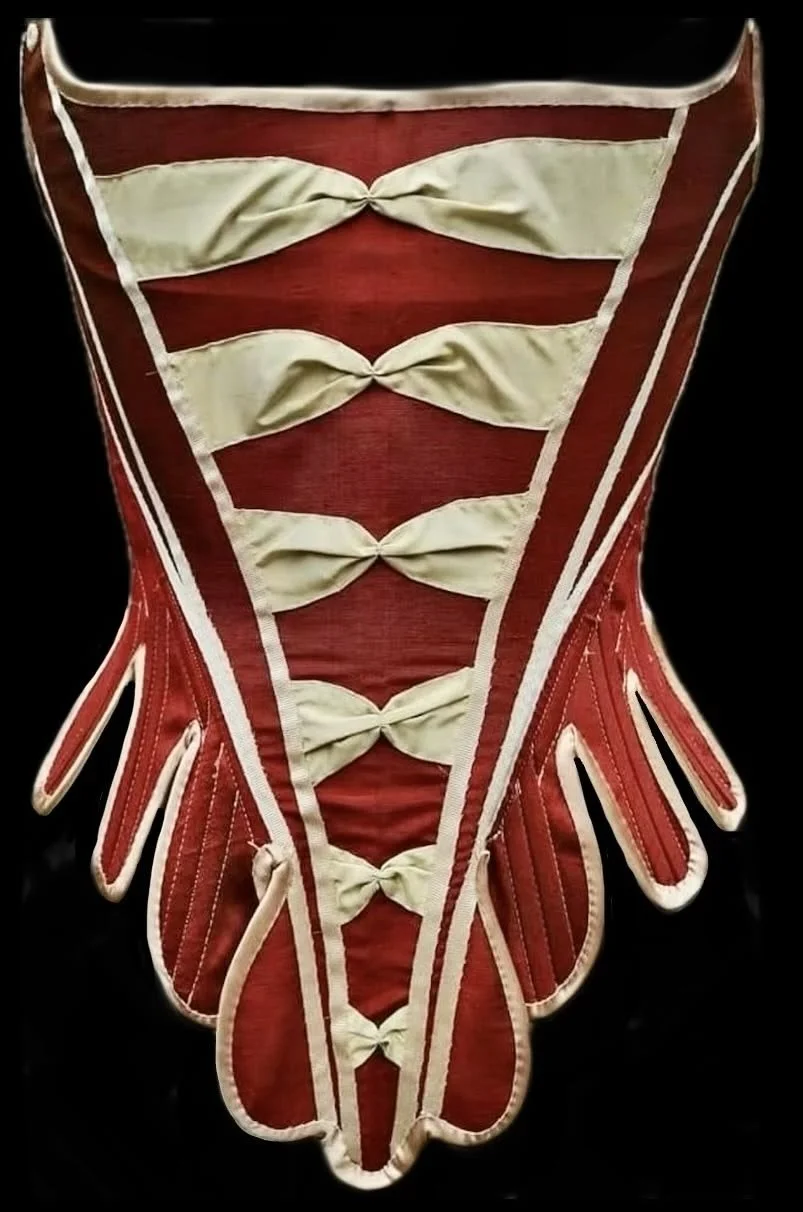
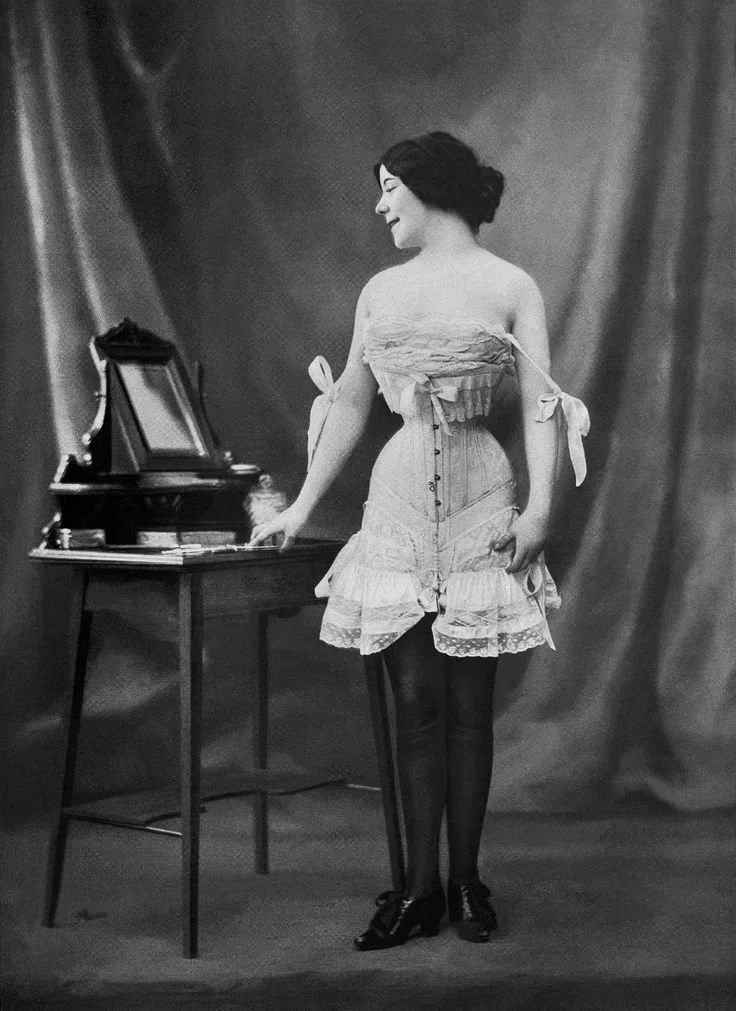
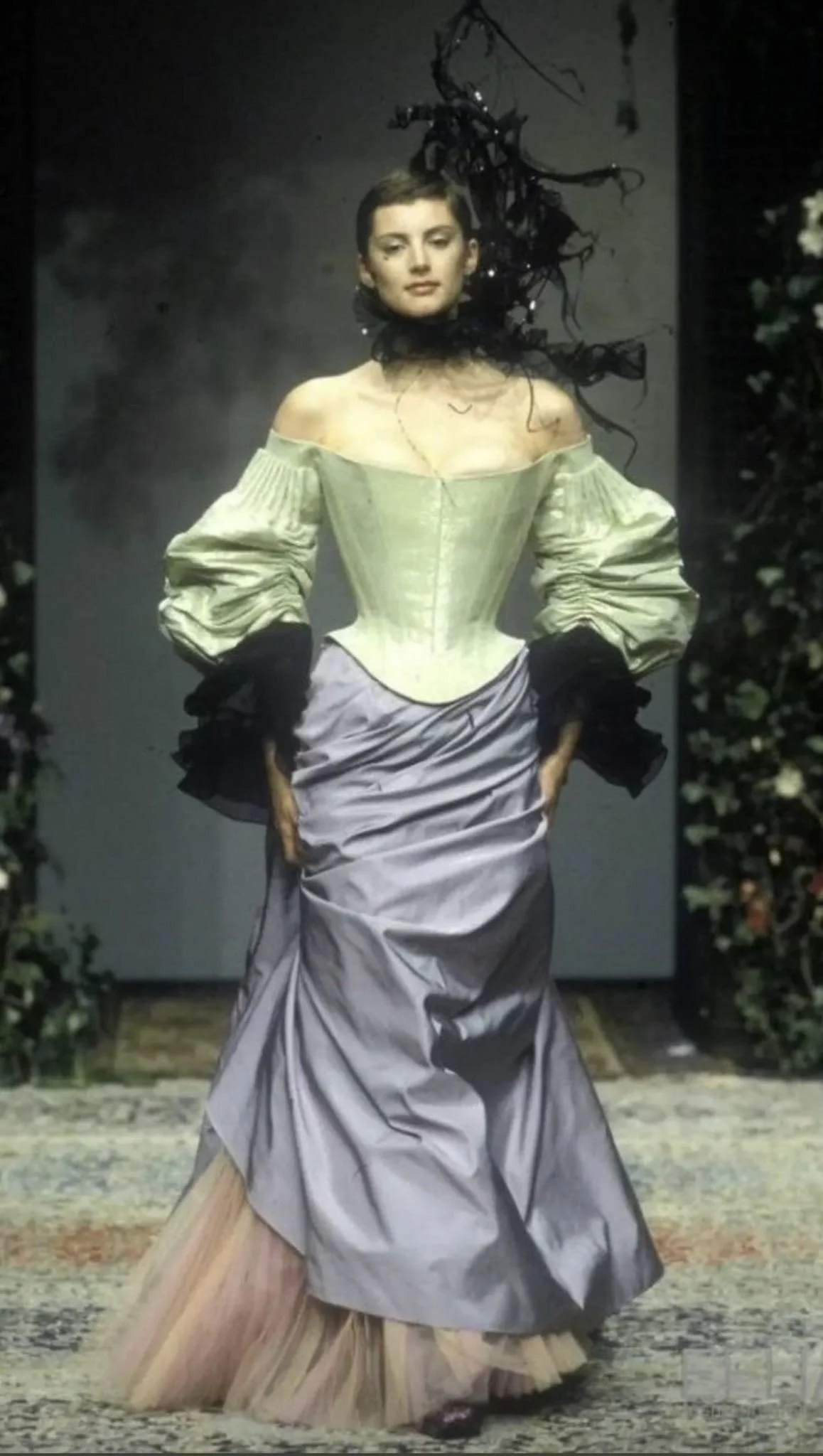
Corsetry at OBADIA
At OBADIA, corsetry is approached as a language of design rather than a historical costume.
Our collections reinterpret traditional construction through modern silhouettes, allowing structure and softness to coexist. Inspired by nineteenth-century tailoring, lingerie and romantic aesthetics, our garments celebrate craftsmanship while remaining effortless to wear.
Rather than recreating the past, we seek to reinterpret its elegance for today.
Personally, I looove to look at old garments and I plan on collecting a few & making my own little museum…
Final Thoughts
The corset has travelled an extraordinary path through fashion history.
From royal courts to contemporary runways, it has reflected changing ideals of beauty, craftsmanship and identity.
Today, it stands not as a symbol of restriction, but as a testament to fashion's ability to reinvent itself—honouring centuries of savoir-faire while inspiring new generations of designers.
-Marie <3
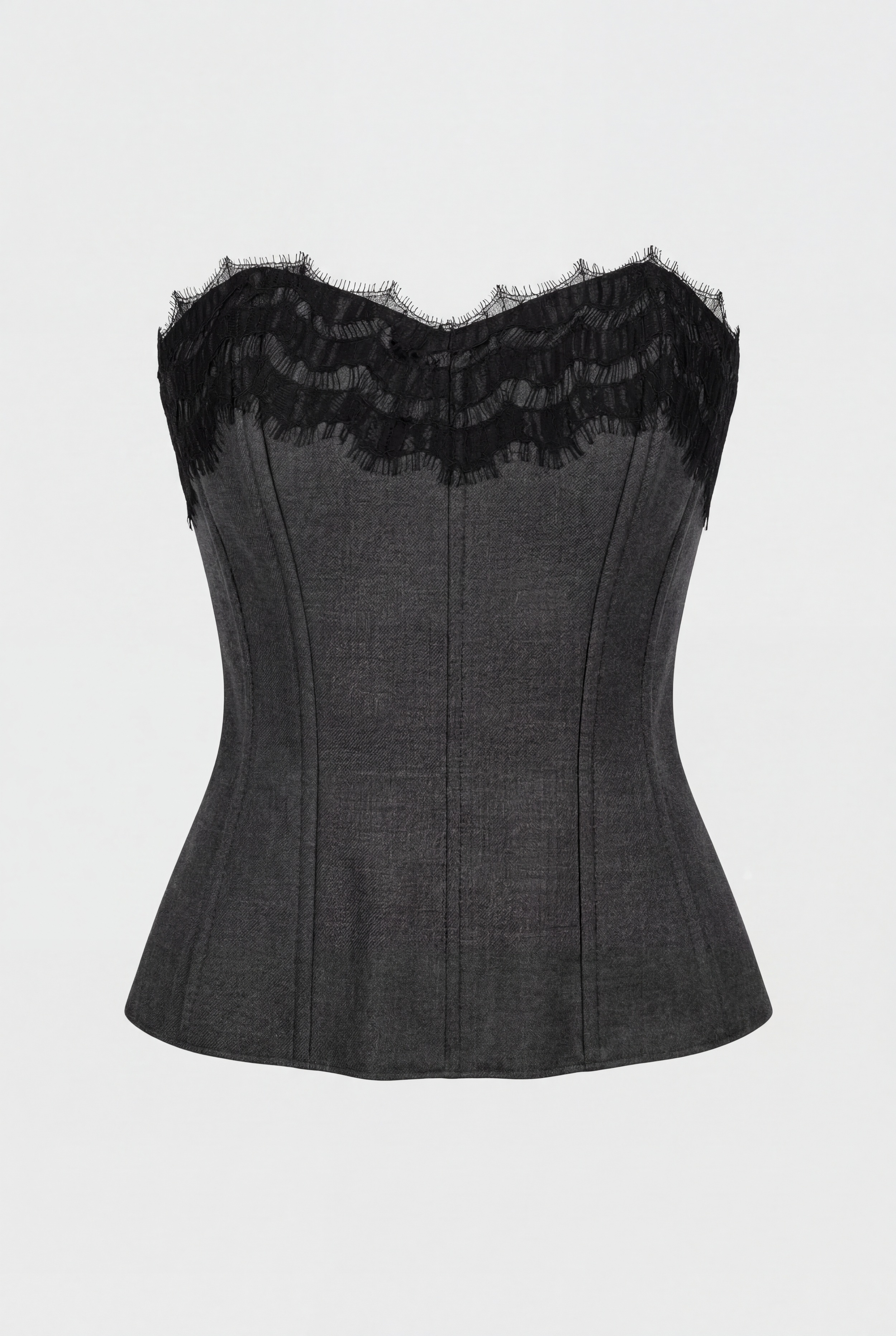
The Astrid Top is a structured grey wool bustier featuring internal boning for support and a sculpted silhouette. Delicate lace detailing contrasts with the structured virgin wool, while hook-and-eye closures allow for a precise fit.
For a full look, pair it with the Manhunt Jacket and Marilyn Skirt.
Color : Gray
Crafted from luxury deadstock fabric.