
The Empire Waist: From Napoleon's Court to Contemporary Fashion
The Silhouette That Refused to Die
Fashion has always looked backwards to move forwards. Every few decades, a silhouette forgotten by time resurfaces, not as a simple revival, but as a reflection of the cultural moment. Among these enduring forms, few have demonstrated the resilience and elegance of the Empire waist.
Defined by a raised waistline sitting just beneath the bust, the Empire silhouette has travelled across more than two centuries of fashion history. It has embodied revolution, romance, femininity and modernity in equal measure, proving that true design is never confined to a single era.
Born from Revolution
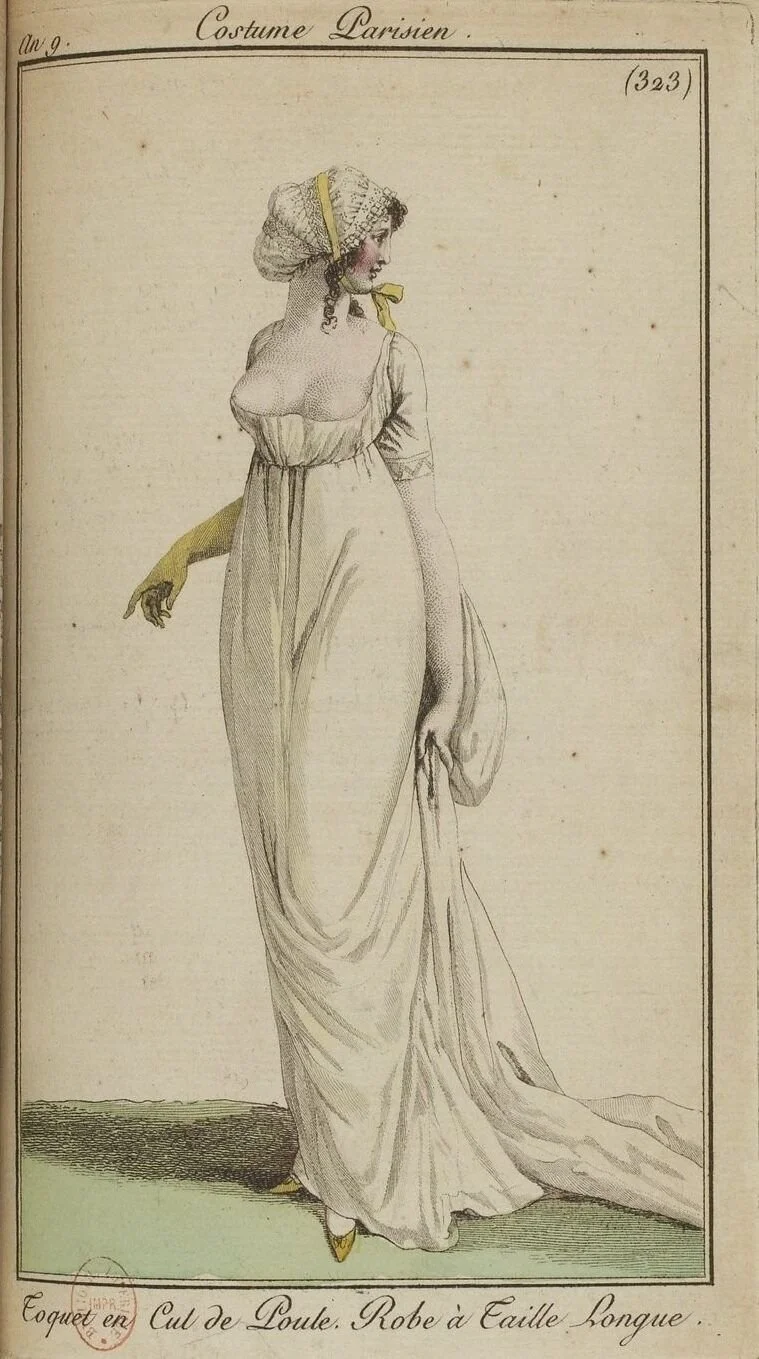
The Empire silhouette emerged in France at the turn of the nineteenth century, during one of the country's most transformative periods. As the elaborate panniers, corsets and embroidered excesses of the Ancien Régime disappeared alongside the aristocracy, a new aesthetic began to take shape.
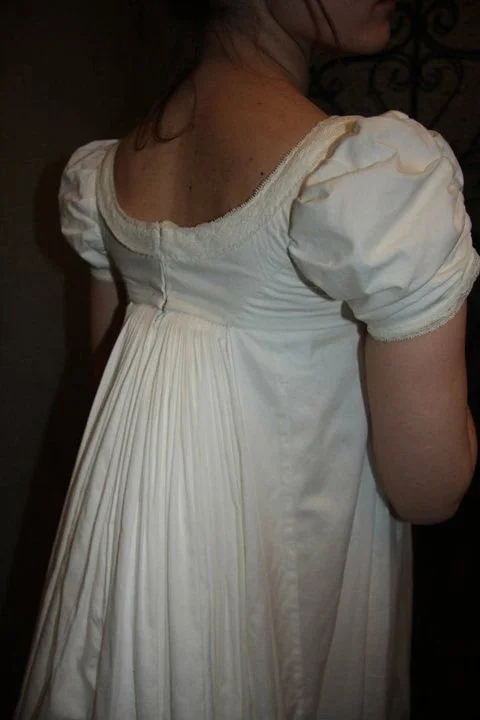
Inspired by the draped garments of Ancient Greece and Rome, dresses became lighter, freer and infinitely more natural. High waistlines elongated the figure while soft fabrics such as muslin flowed around the body instead of sculpting it into rigid forms.
It was fashion stripped back to its essence.
The silhouette reflected a society eager to distance itself from the symbols of monarchy and embrace ideals of simplicity, reason and classical beauty.
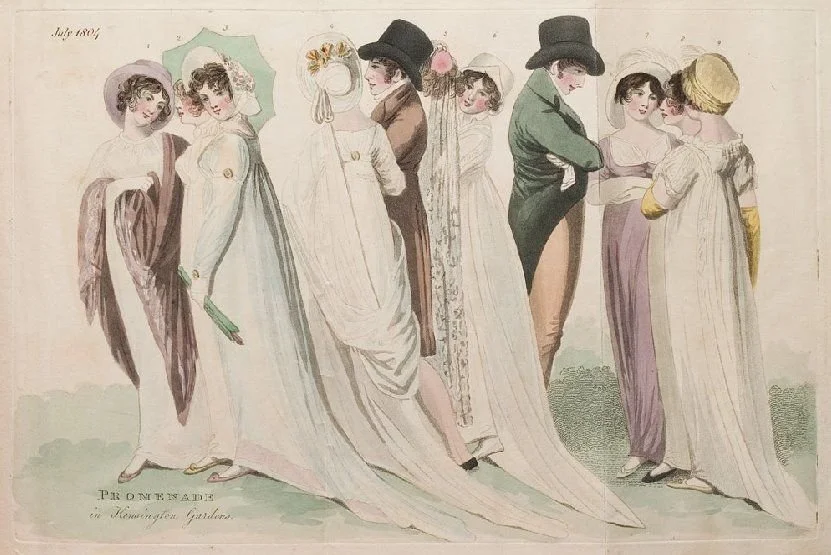
Promenade in Kensington Garden, July 1804.
Joséphine de Beauharnais - the Birth of an Icon
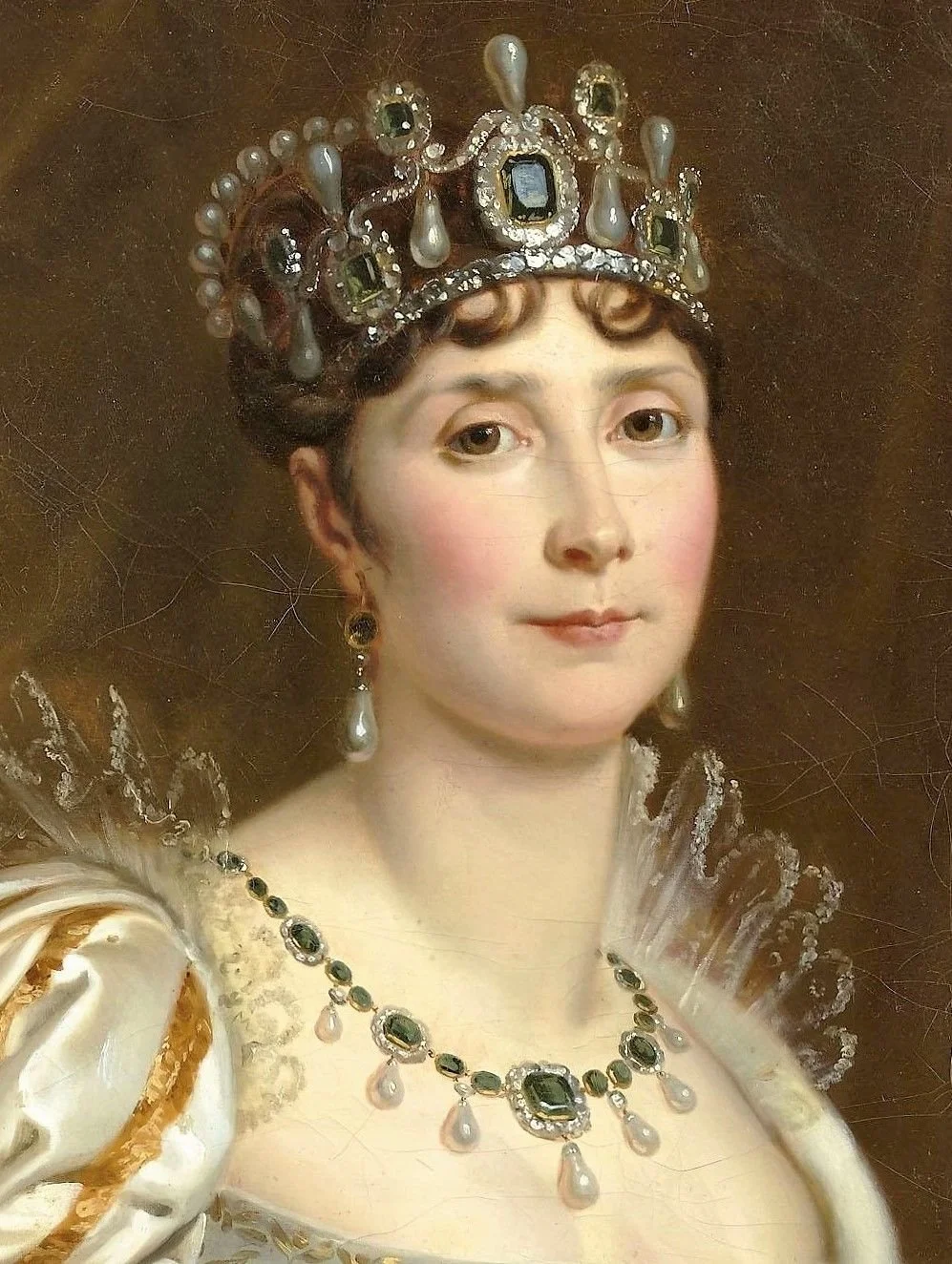
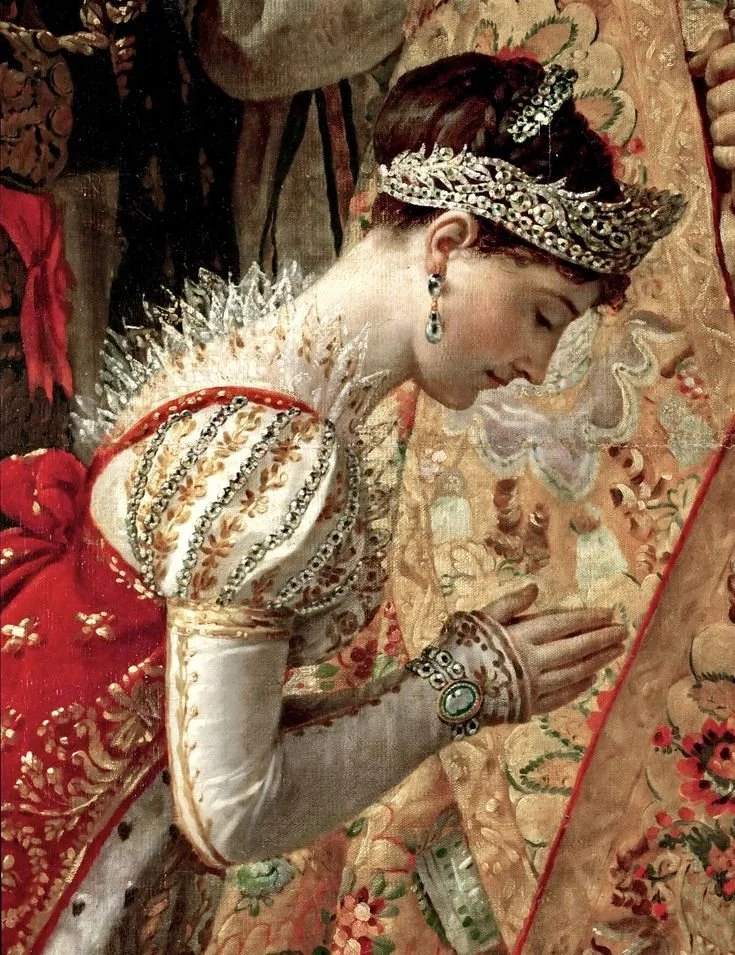
No woman defined the Empire silhouette more than Joséphine de Beauharnais.
As Empress of France and wife of Napoleon Bonaparte, Joséphine transformed what had been a fashionable novelty into the defining look of an entire era. Portraits painted by François Gérard and Pierre-Paul Prud'hon immortalised her wearing flowing white gowns with elevated waistlines, delicate embroidery and understated jewellery.
Her influence extended far beyond the French court.
Across Europe, women adopted the same silhouette, fascinated by its effortless elegance and the illusion of graceful height it created.
More than clothing, the Empire dress became an expression of refinement.
The Art of Illusion
Perhaps the enduring success of the Empire waist lies in its remarkable understanding of proportion.
By raising the waistline, the legs appear longer. The neckline becomes the focal point.
The fabric falls freely from the body, creating movement instead of restriction.
It is a silhouette that flatters without forcing itself upon the wearer.
Unlike many historical fashions, it does not rely on exaggerated construction or architectural undergarments to achieve its beauty.
Its elegance comes from balance.
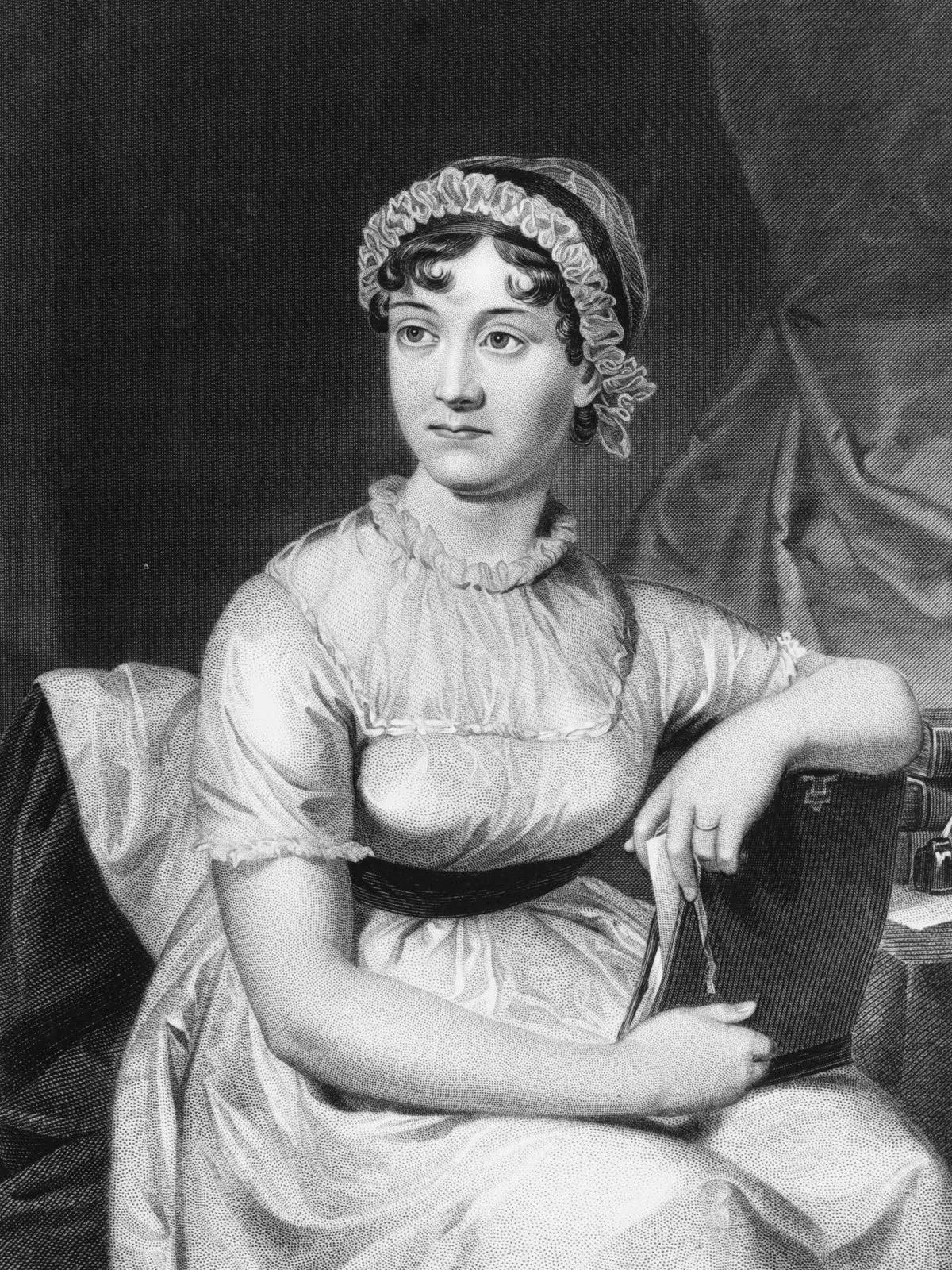
Jane Austen (1775-1817)
Jane Austen and the Regency Ideal !
While France gave birth to the Empire silhouette, Britain embraced it with equal enthusiasm during the Regency era.
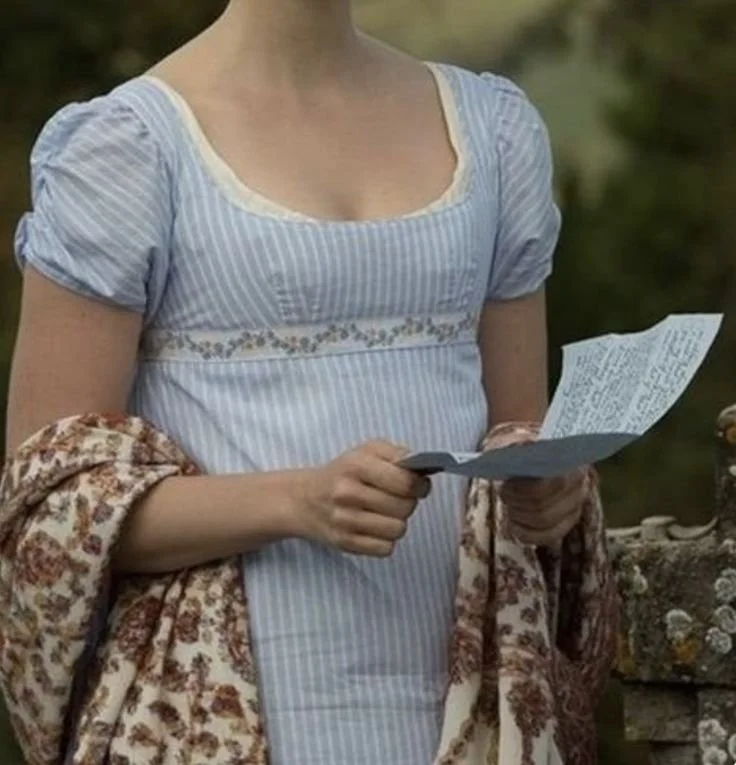
Today, the raised waistline is inseparable from the world of Jane Austen. Adaptations of Pride and Prejudice, Sense and Sensibility and Emma have immortalised flowing muslin gowns, delicate shawls and ribbon-trimmed bonnets as symbols of romance and refinement.
Yet these dresses were remarkably modern for their time. Compared to the rigid court gowns of the eighteenth century, they offered women unprecedented freedom of movement. Walking, dancing and travelling became easier, while the silhouette itself reflected a growing appreciation for natural proportions rather than exaggerated structure.
The Empire waist was not only elegant - it represented a new way of dressing.
Reinvention Through the Decades
Although closely associated with the early nineteenth century, the Empire waist has never truly disappeared.
It resurfaced during the Romantic period, reappeared in the Edwardian era and became particularly popular again during the 1960s. Designers such as Cristóbal Balenciaga, Yves Saint Laurent and later John Galliano revisited its proportions, each interpreting the silhouette through the language of their own generation.
Even contemporary red carpets regularly celebrate the Empire line for its timeless ability to combine sophistication with ease.
Unlike trends that depend on novelty, the Empire silhouette survives because it answers a universal desire for elegance.
The Empire Waist on Screen
Cinema has played a crucial role in preserving the timeless appeal of the Empire silhouette. Few garments evoke romance and elegance as effortlessly on screen. From the candlelit ballrooms of Pride & Prejudice (1995 Series & 2005 Movie) and Emma (2020) to the emotional intimacy of Sense & Sensibility the Empire waist has become shorthand for grace, femininity and quiet strength. Among the many interpretations of the Regency era, the BBC adaptation of Pride and Prejudice (1995) has remained a personal favourite since childhood. Its remarkable attention to historical costume, understated elegance and unforgettable performances played a quiet yet lasting role in shaping my fascination with period dress and continue to inspire the world of OBADIA today.
Costume designers are drawn to the silhouette for its remarkable ability to move naturally with the body. Unlike heavily structured gowns, Empire dresses flow with every gesture, creating an effortless sense of movement that feels both historical and strikingly modern. Whether capturing the refined world of the Regency era or reinterpreting historical fashion through a contemporary lens, filmmakers continue to return to this silhouette because it conveys emotion as much as elegance.
Its enduring presence on screen reminds us that great costume design is never merely decorative. It shapes character, reinforces storytelling and allows fashion history to live far beyond museums and archives.
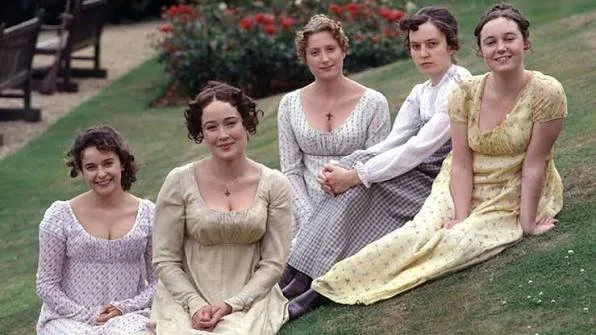
Pride & Prejudice, BBC Mini-Series, 1995.
A Modern Interpretation
At OBADIA, historical references are never treated as costume.
Instead, they become foundations upon which contemporary garments are built.
The Empire Dress revisits one of fashion's most enduring silhouettes through modern tailoring, structured wool deadstock fabrics and restrained detailing. The elevated waistline preserves the graceful proportions that made the silhouette famous, while the architectural construction anchors it firmly in the present.
Rather than recreating history, it continues the conversation.
The result is a garment that feels equally appropriate inside a nineteenth-century portrait or a contemporary Parisian wardrobe.
Why Timelessness Matters
Luxury has increasingly become synonymous with speed. Collections change weekly. Trends disappear almost as quickly as they appear.
Yet the garments that remain meaningful are rarely those designed to capture a single season.
They are pieces rooted in history, constructed with intention and capable of transcending time.
-Marie <3
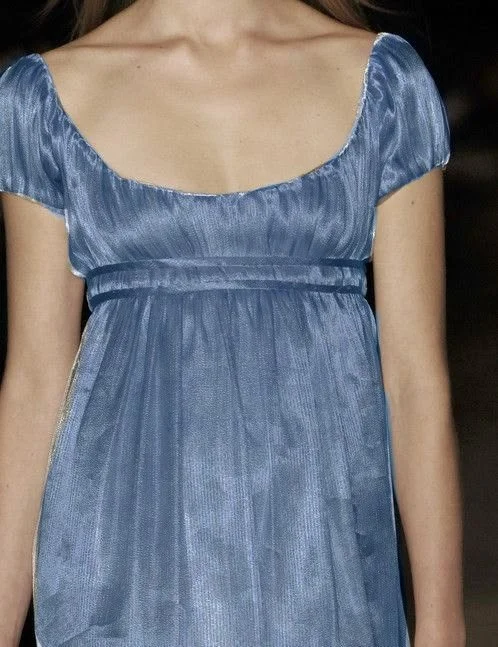
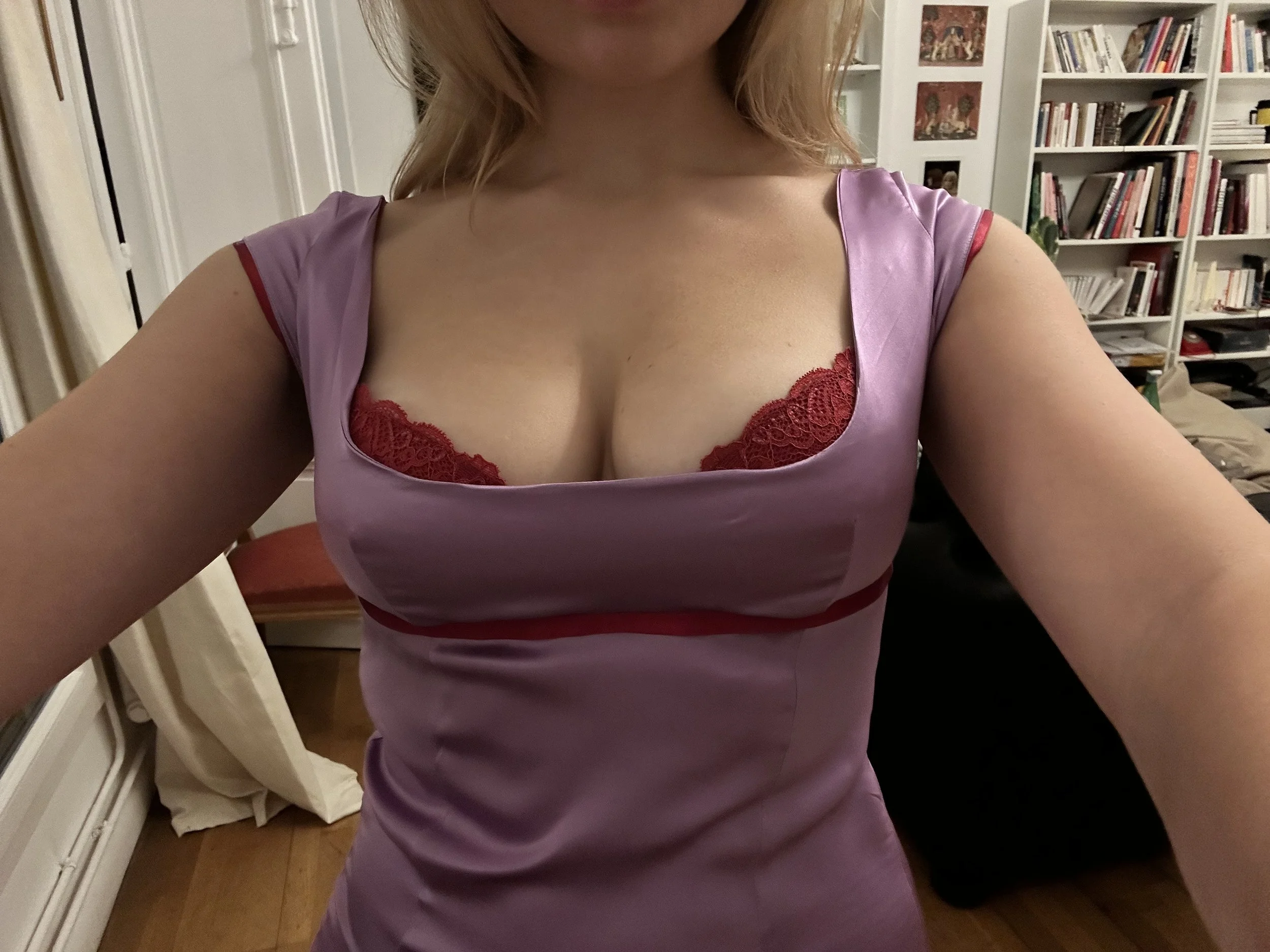
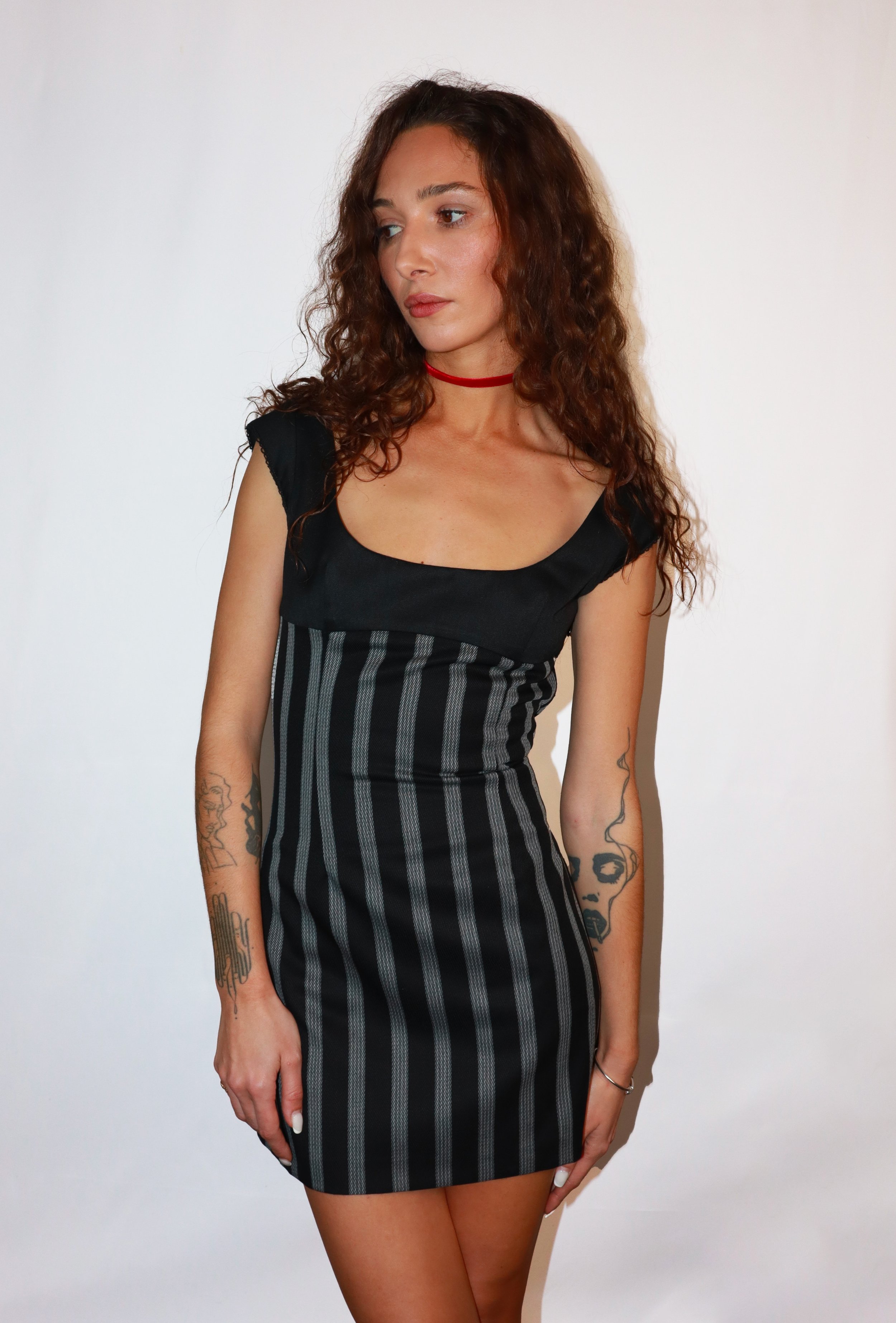
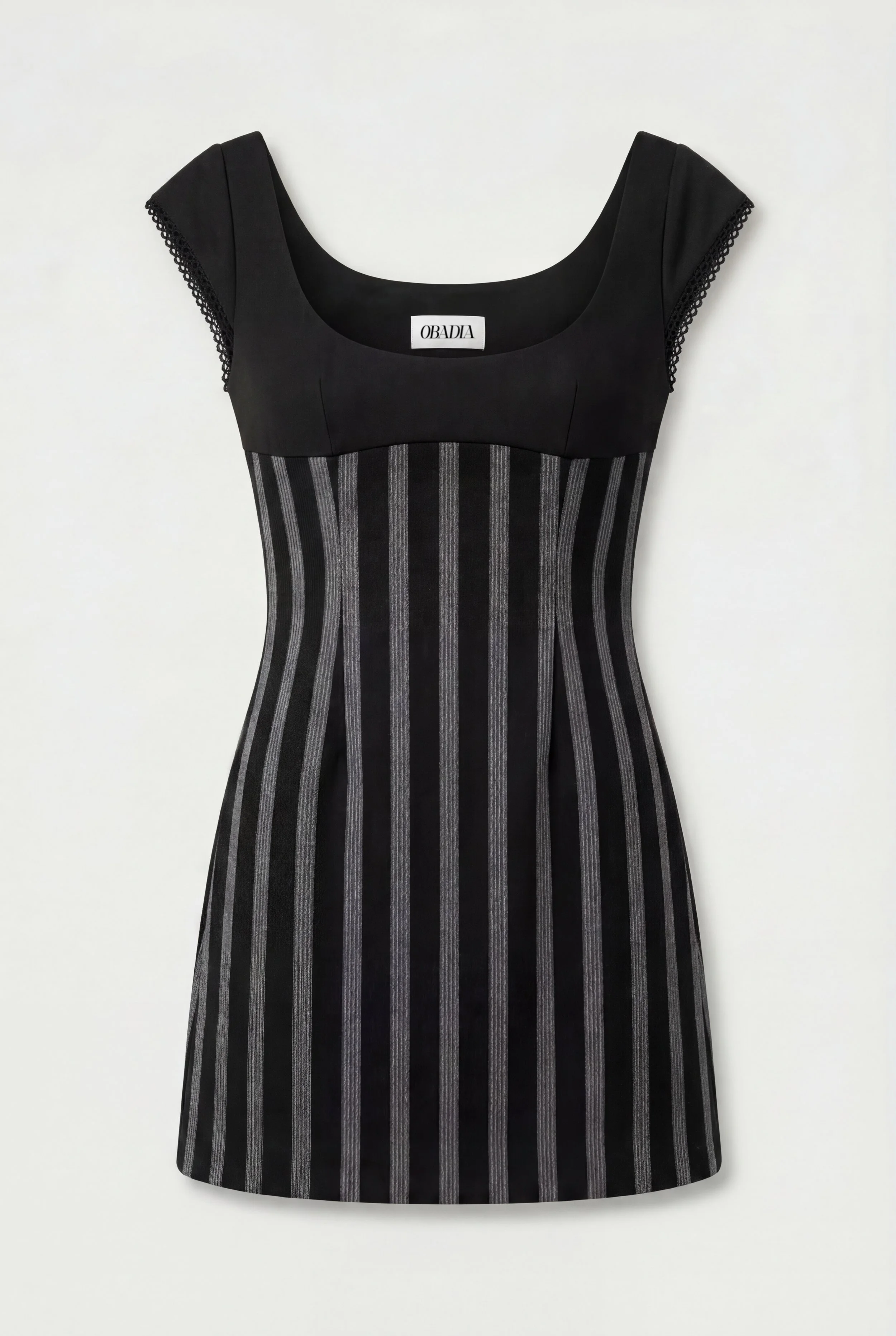
Feminine short bi-material dress with a high waist and an empire neckline.
Noa is wearing a size XS.
Made from luxury deadstock fabric.