
Every year, on the last night of October, the world embraces darkness. Faces disappear behind masks, candles illuminate hollowed pumpkins, and the supernatural briefly becomes part of everyday life.
Yet long before Halloween became a celebration of costumes, horror films and trick-or-treating, it was associated with something far more mysterious: the changing of seasons, the arrival of winter, and the belief that the boundary separating the living from the dead could momentarily disappear.
To understand Halloween is to travel back centuries, to a time when darkness was not simply feared, but respected…
I. Samhain: The End of Summer
The earliest roots of Halloween are commonly traced to Samhain, an ancient Celtic festival marking the end of the harvest season and the beginning of winter.
Celebrated around the transition from October 31st to November 1st, Samhain represented a turning point in the year. The warmth and abundance of summer gave way to the cold, uncertain months ahead.
For Celtic communities, this seasonal transition carried a profound symbolic significance. Winter was associated with darkness, scarcity and death, while the changing year suggested both an ending and a beginning.
According to traditions preserved in later Irish folklore, Samhain was also a moment when the boundaries between the human world and the supernatural became unusually fragile.
Spirits and otherworldly beings were believed to move more freely among the living.
Fires were lit, gatherings were held, and rituals marked the passage into the darker half of the year. Although the precise practices of the ancient Celts remain difficult to reconstruct, the association between Samhain and the supernatural would become one of Halloween's most enduring legacies.
II. When the Dead Returned
Perhaps the most fascinating aspect of Halloween's origins lies in the ancient relationship between the living and the dead.
In the folklore surrounding Samhain, supernatural beings were not merely figures of terror. They belonged to an invisible world that existed alongside the human one.
The arrival of winter was imagined as a moment when these two worlds could intersect.
Offerings of food were sometimes left to appease wandering spirits, while disguises and costumes became associated with the desire to conceal one's identity from supernatural visitors.
The mask, therefore, was not originally just an ornament or a form of entertainment. In later folk traditions, it could serve as a means of protection, transformation or temporary anonymity.
Behind a disguise, the familiar became unfamiliar. For one night, ordinary identities could dissolve.
III. From Samhain to All Hallows' Eve
With the spread of Christianity across Europe, older seasonal customs gradually encountered new religious traditions.
November 1st became associated with All Saints' Day, a Christian feast honouring the saints, while November 2nd was dedicated to the commemoration of the faithful departed.
The evening preceding All Saints' Day was known as All Hallows' Eve, a name that would eventually contract into the word Halloween.
Rather than disappearing entirely, elements of earlier traditions survived and evolved alongside Christian practices.
The result was a complex celebration shaped by centuries of religious change, popular beliefs and local folklore.
The precise relationship between Samhain and the Christian calendar continues to be debated by historians. Yet the coexistence of these traditions helped establish Halloween as a night associated with remembrance, mystery and the presence of the dead.
IV. The Origins of the Mask and the Jack-o'-Lantern
Many of the symbols we now associate with Halloween emerged through centuries of folklore.
In Ireland and Scotland, disguising oneself and visiting neighbouring homes became established seasonal customs. By the early modern period, it involved people wearing costumes and receiving food or small gifts.
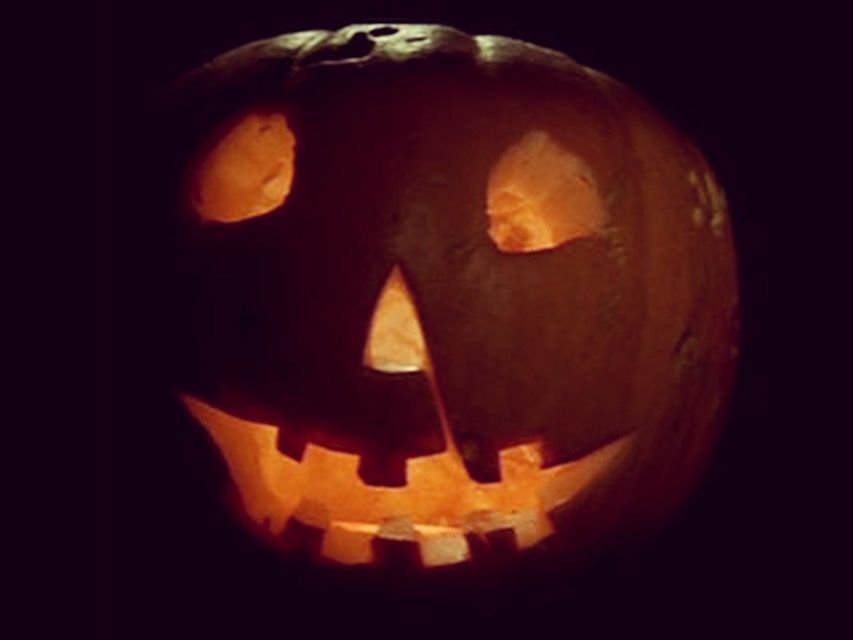
The famous illuminated pumpkin has an equally curious history : before pumpkins became Halloween's most recognisable symbol, people in Ireland and Scotland carved faces into turnips and other root vegetables, illuminating them from within.
One well-known Irish folktale tells the story of Stingy Jack, a cunning man who tricks the Devil but is ultimately condemned to wander the earth, carrying a light inside a hollowed turnip.
When Irish immigrants brought their traditions to North America during the nineteenth century, pumpkins gradually replaced turnips. Larger and easier to carve, they became the glowing faces that now dominate Halloween imagery.
V. The Art of Disguise: Becoming Someone Else
Long before Halloween costumes became a form of entertainment, disguises were associated with something far more mysterious: the possibility of concealing one's identity, confronting the unknown, and temporarily becoming someone (or something) else.
In the folklore surrounding Samhain, the night was believed to bring the human and supernatural worlds unusually close together. According to popular interpretations of these traditions, disguising oneself as a frightening creature could offer protection from wandering spirits, allowing the wearer to blend into the strange world believed to emerge after dark.
Although the precise origins of these practices remain uncertain, the tradition of wearing disguises became firmly established in Ireland and Scotland. By the sixteenth century, guising involved people dressing in costumes, visiting neighbouring homes and performing songs, verses or other entertainments in exchange for food.
But the fascination with disguise extended far beyond Halloween !
Throughout European history, masks played an important role in social and cultural life. During the Venetian Carnival, particularly in the eighteenth century, elaborate masks and cloaks concealed the faces, clothing and social standing of their wearers. Behind a mask, distinctions of class, gender and identity could become less immediately visible, allowing individuals to move through society with an unusual degree of anonymity.
The mask created a fascinating paradox: by hiding one's identity, it offered the freedom to express another. This idea would become central to the history of masquerade, theatre and eventually fashion itself.
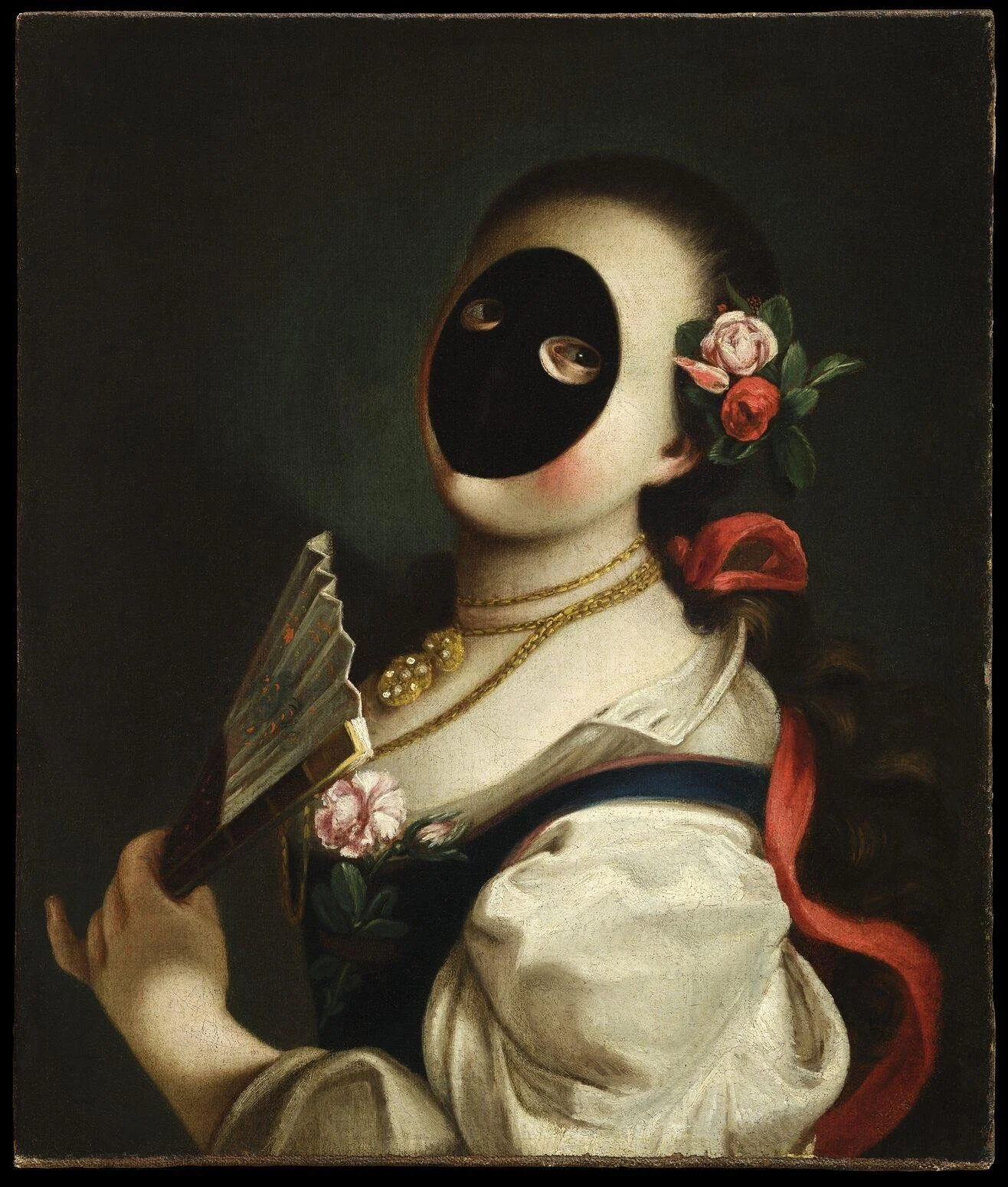
Pietro Antonio Rotari (Verona 1707 – St Petersburg 1762), Dama con moretta, oil on canvas.
Clothing has always possessed the remarkable ability to transform its wearer. A silhouette can suggest authority, a fabric can evoke sensuality, and a carefully constructed appearance can reveal, or conceal, an entirely different personality.
From the theatrical extravagance of historical masquerades to the romantic darkness of Gothic fashion, dressing up has never been simply about decoration. It is also an act of imagination, a way of inhabiting another character, another era, another version of oneself.
Halloween brings this transformative power into its most theatrical form. For one night, ordinary conventions are suspended. Perhaps this is the true fascination of Halloween: not merely the opportunity to disguise ourselves, but the freedom to explore the identities hidden beneath our everyday appearance.
For what is a costume, after all, if not the possibility of becoming someone else?
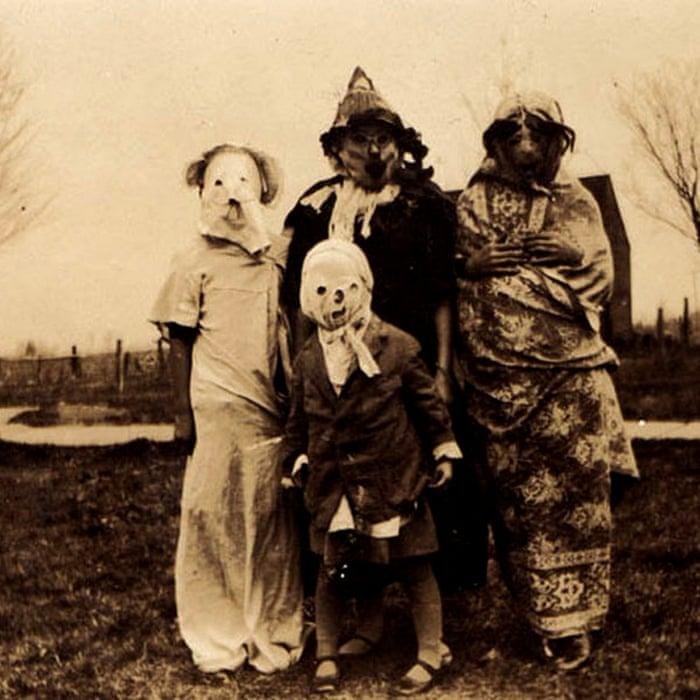
Vintage halloween costume; time and place unknown.
VI. The Reinvention of Halloween
During the nineteenth and twentieth centuries, Halloween underwent another transformation.
Irish and Scottish immigration helped establish the celebration in North America, where it gradually developed into a widely observed secular holiday.
Costumes became increasingly elaborate, neighbourhood celebrations grew in popularity, and the practice of trick-or-treating became firmly established during the twentieth century, particularly after the Second World War.
Meanwhile, literature, Gothic imagery and eventually cinema helped shape Halloween's visual identity. Ghosts, witches, vampires and other creatures of the night became central figures in a celebration increasingly devoted to the theatrical representation of fear.
What had once been a seasonal passage marked by rituals and supernatural beliefs had evolved into a night of fantasy, performance and transformation.
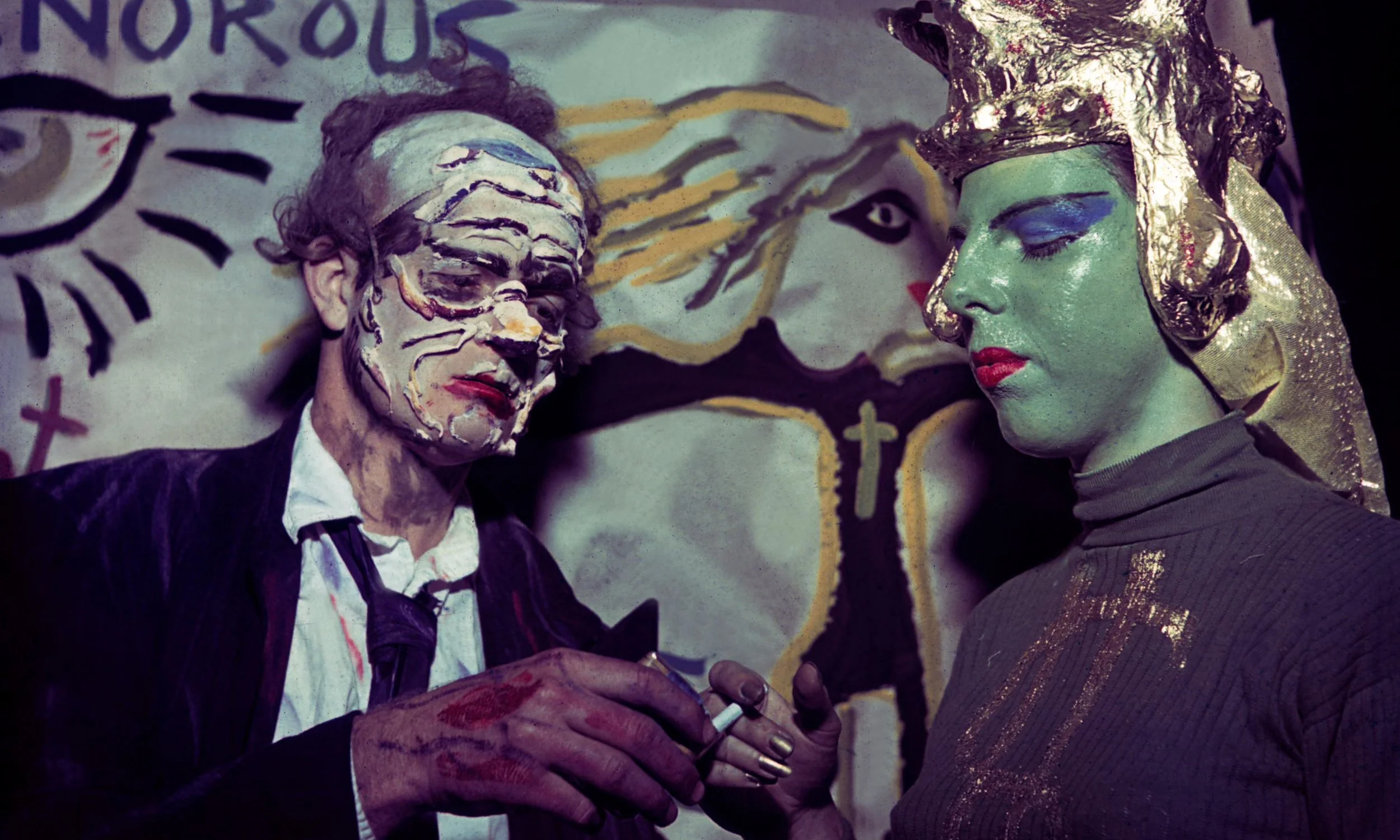
Art Institute of Chicago’s Halloween ball, 1949.
VII. The Beauty of Darkness
Today still, Halloween remains a celebration of contrasts : life and death, light and darkness, fear and fascination and to a certain extent, the familiar and the unknown.
It offers us to approach what we ordinarily avoid: mortality, mystery and the beauty of the supernatural.
For one night, the boundaries of everyday life are suspended. We disguise ourselves, inhabit other identities and embrace the strange.
Perhaps this is why, after so many centuries, Halloween continues to fascinate.
Because beneath the costumes and candlelight, the same ancient question remains: what if, for one night, the dead could walk among us?
VIII. A Note from Mexico: Día de los Muertos
As I write these words from Mexico, another celebration of the dead is taking place: Día de los Muertos.
Observed primarily on November 1st and 2nd, this Mexican tradition brings a different perspective to the relationship between life and death. Families honour their departed loved ones through colourful altars, candles, marigold flowers and offerings of their favourite foods, welcoming their memory and, symbolically, their temporary return.
Although Halloween and Día de los Muertos have distinct cultural and historical origins, both invite us to reflect on the fragile boundary between the living and the dead.
What I find particularly fascinating is the contrast in how death is represented. Where Halloween often embraces fear, darkness and the supernatural, Día de los Muertos approaches death through remembrance, colour and celebration.
Two different traditions, yet both remind us that death has always occupied a profound place in the human imagination.
In remembering the dead, we find another way of celebrating life!
- Marie <3
References & Further Reading
1. Library of Congress, Halloween & Día de Muertos Resources. Research Guides at Library of Congress. https://guides.loc.gov/halloween/introduction
2. Smithsonian Magazine, Brandon Tensley, The Celtic Origins of Trick-or-Treating (septembre/octobre 2024). https://www.smithsonianmag.com/history/celtic-origins-trick-treating-halloween-180984916
3. University of Kentucky, UK Folklorist Explains the Spellbinding History of Halloween (31 octobre 2022). UK Research. https://research.uky.edu/news/uk-folklorist-explains-spellbinding-history-halloween
4. National Museum of Ireland, Ghost Turnips, the Púca, Fortune-Telling and Evil Abductions... How Our Ancestors Inspire Our Halloween Celebrations Today (2020, repris en 2023). https://source.museum.ie/en-IE/News/2023/Ghost-turnips%2C-pucas%2C-fortune-telling-and-evil-abd
5. New Orleans Museum of Art, Behind the Mask in 18th-Century Venice (21 mars 2017). https://noma.org/behind-mask-18th-century-venice